
Wholesale LED String Lights and Christmas Lighting for U.S. Commercial Buyers
Illuminations Supplier connects U.S. wholesale and commercial buyers, retailers, municipalities, hospitality groups, and professional Christmas light installers, with verified suppliers of commercial-grade LED string lights, Christmas lighting, and event lighting. We check UL or ETL listing and the technical datasheet behind every range before making an introduction; CE marking alone doesn't clear that bar. Tell us your volume, your product range, and your target install date, and we'll come back with a personalized quote.
How this introduction service works
This site is not a shop. Illuminations Supplier does not manufacture lighting, hold stock, or ship orders. We review a supplier's UL or ETL listing, technical datasheet, and a physical sample before agreeing to introduce a commercial buyer to them.
What happens after you reach out
Tell us your approximate volume, the range you need, your delivery state, and your target date. If a supplier in our network fits, we make the introduction directly by email. From there, price, samples, lead time, and contract terms are negotiated between you and the supplier.
A different question from buying at retail
A commercial buyer ordering several thousand feet of string lights has different needs from a shopper picking a box off a shelf. The question is not whether a strand looks good on a display rack. It's whether every unit in a production run matches the datasheet of the sample you approved, and whether the listing mark on the box will hold up with your electrical inspector or your insurer.
What this service does, and what it doesn't
We check UL or ETL listing, the technical datasheet, and a sample before agreeing to route a request to a supplier. We match your volume, range, and delivery location to a supplier that fits, and we make a direct introduction by email at no cost to you.
What we don't do
We don't manufacture lighting or hold inventory ourselves. We don't set the price; that's negotiated directly with the supplier. We're not a party to the purchase order, the shipment, or the invoice, and we don't handle customs clearance on your behalf.
Who sources wholesale string lights and holiday lighting in the U.S.
Four kinds of buyers send requests through this page, each working to a different set of constraints.
Retailers and property managers
Storefronts, shopping centers, and multi-location retailers that refresh seasonal lighting on a set schedule. What matters most is visual consistency across locations and stock landed before the season's key trading dates.
Cities, counties, and business improvement districts
Downtown holiday lighting, tree lighting ceremonies, and temporary street displays. Budget cycles and procurement rules are fixed well in advance, and a UL or ETL mark is typically a hard requirement for any bid to even be considered.
Hospitality, restaurants, and event venues
Patios, hotels, wedding venues, and trade show booths. Demand repeats every season with a strong preference for a specific look, warm white commercial-grade string lights being the most requested.
General contractors and property services
Landscapers, electricians, and facilities companies that add holiday lighting installation to their service line. Order volume can swing a lot from one contract to the next, along with a need for commercial-grade wire gauge that survives a multi-year install and removal cycle.
The professional Christmas light installation trade
Professional Christmas light installation is a structured, seasonal trade in the United States in a way it generally isn't in Europe. Installers design, hang, and later remove lighting for homeowners, retail chains, and municipalities, often storing and reusing the same commercial-grade fixtures across several seasons.
Why this matters for a wholesale order
An installer buying for resale or for a rental-and-removal service needs stock that survives repeated handling, not a single-season display. Connector durability, wire gauge, and a listing mark that satisfies their own liability insurance carrier tend to matter more to this buyer than unit price.
Ordering ahead of the install season
Installers typically build their inventory for the coming winter during spring and summer, well before the first residential install goes up in November. Reaching out early in the year gives a supplier more room on production capacity and shipping.
Our lighting ranges
Seven product families make up our catalog, all sourced through verified suppliers rather than manufactured by us.
Outdoor and indoor string lights
Commercial-grade LED string lights for storefronts, patios, and facades, in warm white, cool white, and multicolor, sold on spools or in case packs rather than single retail boxes.
Christmas lighting and light displays
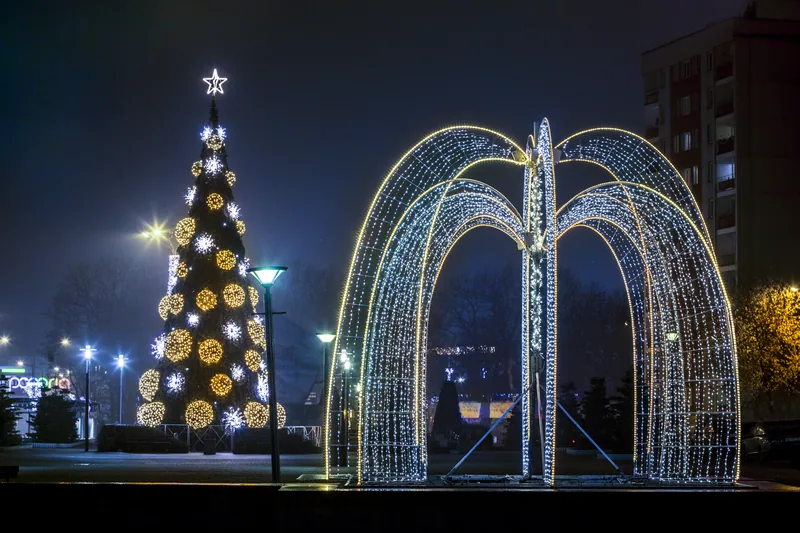
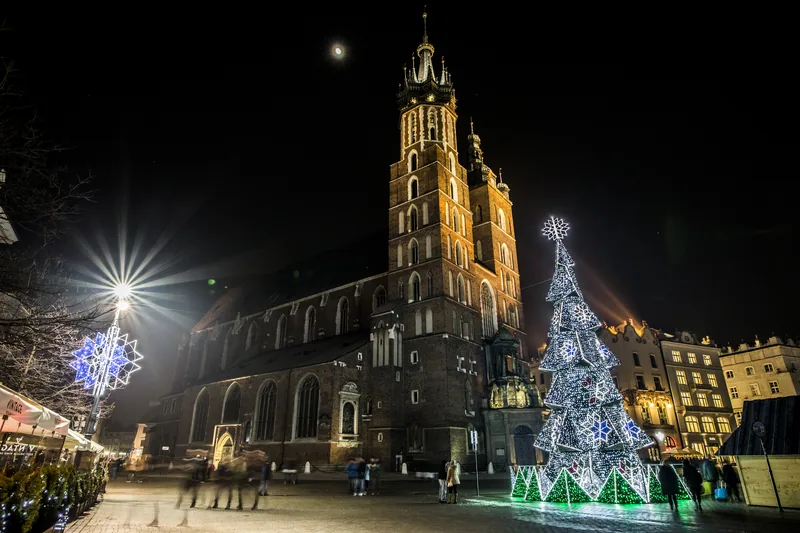
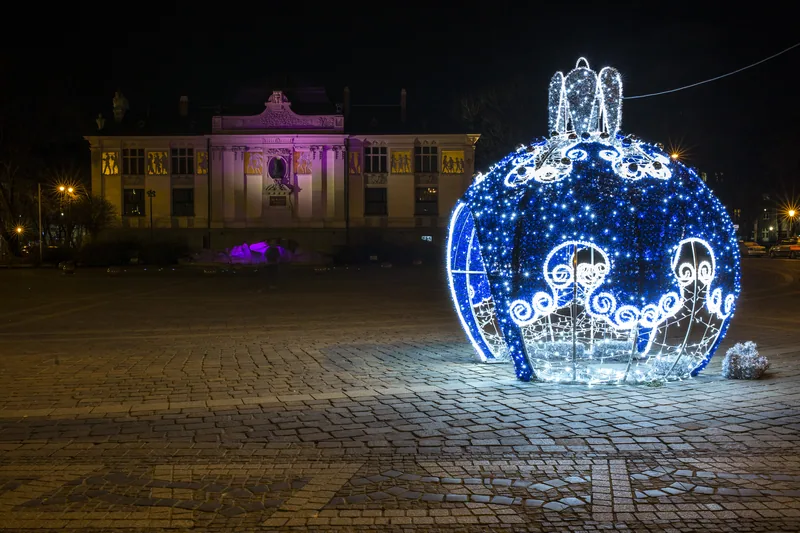
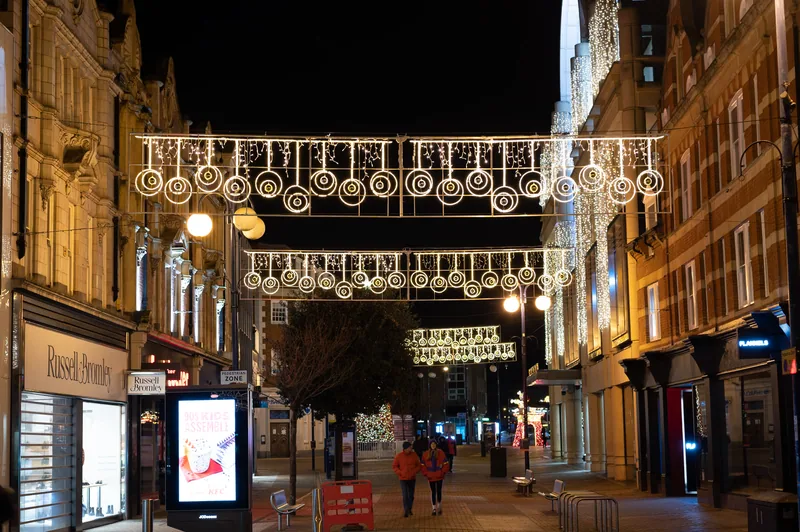
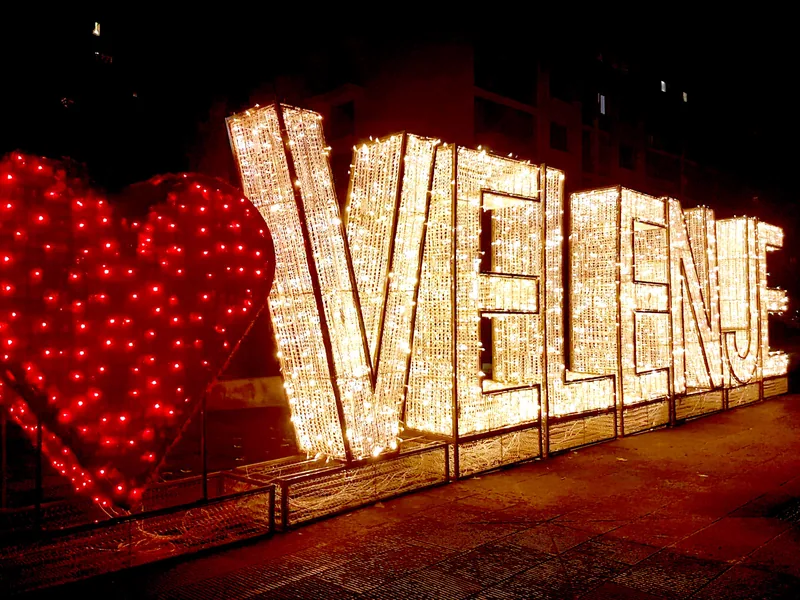
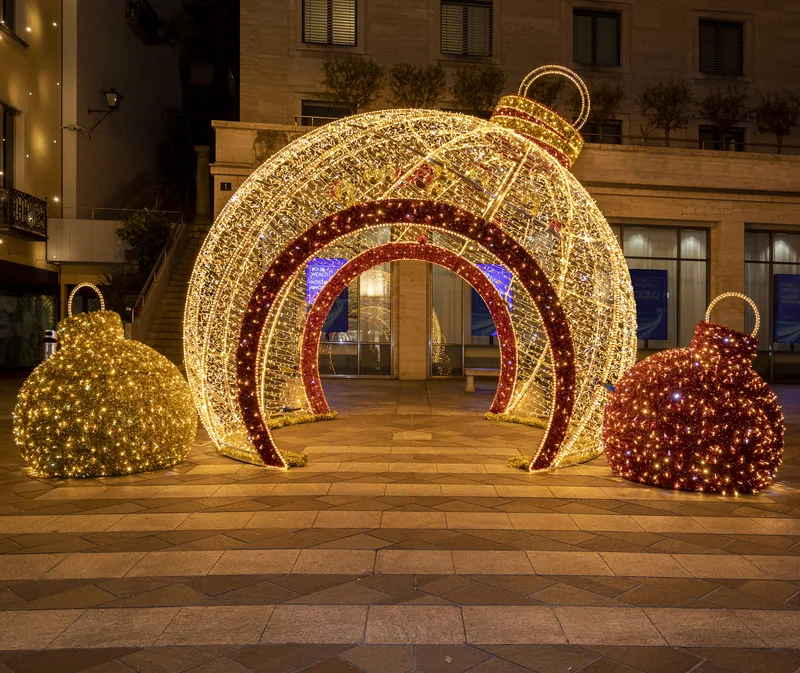
Light curtains, 3D motifs, wrapped trees, and hanging displays for storefronts, malls, and town centers.
Net lights and landscape lighting
LED mesh for hedges, facades, and large surfaces, plus stake-mounted and architectural fixtures for pathways and building outlines.
Event and string lighting
String lighting for patios, weddings, and trade shows, in mains or battery-powered versions that don't require fixed wiring.
LED neon flex
Cuttable neon-style tube for signage, architectural outlines, and lit storefronts, rated for outdoor use and sold by the foot (roughly 30 cm).
Technical specs that matter for a commercial order
A commercial buyer needs to check a handful of specs before confirming volume, beyond how a sample looks on a shelf.
Run length and connectability
String lights are typically sold in set lengths, commonly in the 24 to 100-foot range (about 7 to 30 meters), with a maximum number of strands that can be connected end to end on a single circuit before the run has to restart from a new outlet. Ask your supplier for the connectable run length and the plug spacing in inches, not just the total length printed on one reel.
Color temperature and IP rating
Color temperature is measured in Kelvin: warm white sits around 3000K and cool white around 6000K. The IP rating (IP44, IP65...) tells you whether a strand can handle direct rain and damp for a full season, which matters more outdoors than the name printed on the packaging.
Wire gauge and connector type
Commercial-grade product uses heavier wire gauge and locking, weather-sealed connectors, built to survive repeated install and removal cycles rather than a single-use residential strand.
Voltage, plugs, and sourcing from Europe: what doesn't work here
The U.S. grid runs on 120V at 60Hz, through a NEMA 1-15 (two-prong) or NEMA 5-15 (three-prong grounded) plug. European lighting is built for 230V at 50Hz, with a completely different plug and, often, internal components rated for that voltage only. Voir aussi : Wholesale Fairy Lights and Christmas Illuminations for UK Trade Buyers.
Why this trips up buyers sourcing in Europe
A sample or a full container built for the European market won't run safely on a U.S. circuit without a step-up transformer, and a transformer doesn't fix the underlying issue: the product wasn't tested or listed for U.S. voltage and code in the first place. It also won't carry a UL or ETL mark, which most commercial buyers need regardless of how the product performs on a test bench.
What to ask a supplier
Confirm the product is built and listed for 120V/60Hz from the start, not adapted after the fact. For outdoor circuits, also confirm it's rated for use on a GFCI-protected outlet, standard on outdoor circuits under the National Electrical Code.
UL and ETL: what U.S. buyers and insurers actually require
CE marking confirms a product meets European requirements. It carries no weight with a U.S. electrical inspector, an insurer, or a municipal procurement office. What they ask for instead is a UL or ETL listing mark.
UL and ETL are not competing standards
Both are Nationally Recognized Testing Laboratories under U.S. federal rules, and both test lighting products against the same safety standards. A supplier with either mark has had their product independently tested, not just self-declared as compliant the way CE marking works.
Why it matters beyond the inspector
A municipality generally won't accept a bid without it, and a commercial property's insurance carrier can question a claim if the lighting installed on site was never listed at all. Ask for the listing mark and the supplier's test report before you commit to volume, not after.
Volumes, packaging, and getting ready to request a quote
Order minimums vary by range and by supplier: event and string lighting generally ships in smaller runs than a full container of Christmas light displays. Tell us your approximate volume and we'll route your request to a supplier whose capacity actually fits it, rather than one that's too small or too large for what you need.
How product ships
Expect spools, reels, or case packs rather than individual retail boxes, with carton counts and inner-pack sizes set by the supplier. Some suppliers may also ask for a resale license or a sales-tax exemption certificate before invoicing at wholesale rates, standard practice for wholesale transactions in the U.S. If you need retail-ready packaging or your own branding on the box, mention it upfront so we only route you to a supplier that can do it at your volume.
Three details that speed things up
Your approximate quantity, the range you're after (indoor, outdoor, holiday, event, neon flex), and your delivery state are enough to get started. A supplier will work out the finer points with you before issuing a firm quote.
Seasonality: when professional buyers should order
Retail demand from individual shoppers buying Christmas lights builds after Thanksgiving and peaks through the following weeks. Commercial buyers who wait that long are ordering too late.
Why professional buyers move earlier
Municipalities set lighting budgets and go through procurement months ahead of the season. Malls, hotel groups, and multi-location retailers plan installation schedules for early November, which means the wholesale order has to land, clear customs, and get installed before that. Most professional buyers place their order in spring or early summer.
What happens if you order late
Supplier production capacity fills up fast the closer you get to fall. A request sent in July has far more room to be matched to the right supplier than the same request sent in October.
Import logistics: sourcing from Asia and getting product to a U.S. site
Most of the lighting in this category is manufactured in Asia and shipped to the United States by ocean freight, commonly through West Coast ports such as Los Angeles, Long Beach, Oakland, or Seattle, with fulfillment continuing by truck or rail to its final destination.
Customs and duties
Goods entering the U.S. are subject to import duties, which vary by product classification and change over time. We don't quote a duty rate here, and any supplier who does should be able to show you the tariff classification it's based on. Ask your supplier for a landed cost that includes duty, not just a factory price.
Lead time, in principle
Total lead time covers production, ocean transit, port handling, customs clearance, and inland freight. Each step adds time on its own, and any of them can stack up during peak shipping season. We won't quote a number of days here: a supplier can give you a realistic estimate once they know your volume and delivery point.
FAQ
What's the minimum order quantity for a wholesale lighting order?
It depends on the range and the supplier. Event and string lighting generally has a lower minimum than a full run of Christmas light displays. Tell us your approximate volume in the form and we'll route your request to a supplier whose capacity fits it.
Do I need UL or ETL listing on lighting sold or installed in the U.S.?
In practice, yes. Neither is a federal legal requirement by itself, but electrical inspectors, insurers, and most municipal or commercial procurement offices won't accept a product without one. It's the first thing we check before considering an introduction.
What's the difference between UL Listed and ETL Listed?
Both are Nationally Recognized Testing Laboratory marks, tested against the same safety standards. UL (Underwriters Laboratories) is the most widely recognized name, while ETL (Intertek) tests to the same standards under a different lab. Most inspectors and insurers accept either mark.
What's the difference between IP44 and IP65 for outdoor lighting?
These are protection ratings under IEC 60529. IP44 protects against splashing water from any direction and solid objects over 1mm, fine for a sheltered spot. IP65 protects against low-pressure water jets and dust, and is what we'd recommend for a strand exposed to weather all season. Either way, an outdoor circuit should also run through a GFCI-protected outlet.
Can we get a sample before committing to a full order?
Most suppliers in our network can send a sample before you commit to a production run. Ask for one once we've made the introduction, and check the length, color temperature, and listing mark yourself before confirming volume.
Can you supply custom packaging or private-label branding?
Some suppliers offer custom packaging or labeling, others don't. Mention it in your message and we'll only route you to a supplier that can do it at your volume.
Do you cover suppliers who ship across the United States?
Coverage depends on the supplier. Most product lands through West Coast ports before moving on nationwide by truck or rail. Tell us your delivery state in the form so we can account for it.
What's the difference between warm white and cool white?
Warm white, around 3000K, gives an amber, incandescent-like glow, common on facades and Christmas lighting. Cool white, around 6000K, is whiter and brighter, and is often used for signage or event lighting. Specify which you need in your request.
Request a personalized quote
Company, range and estimated quantity are the three details that matter most. Everything else helps us route your request faster.
How it works
No cost to submit a request. A person reads every message, and if a supplier fits your needs, we make the introduction directly by email.
Lead time: 4 weeks minimum on trade orders, counted from order confirmation.
Request form
Luci natalizie e illuminazioni LED all'ingrosso per professionisti