
Wholesale Fairy Lights and Christmas Illuminations for UK Trade Buyers
Illuminations Supplier connects UK trade buyers, retailers, local councils, hospitality groups and professional display installers, with verified suppliers of fairy lights, festoon lighting, Christmas illuminations and event lighting. We check UKCA and CE marking and the technical datasheet behind every range before making an introduction, since the two marks now sit alongside each other. Tell us your volume, your product range and your target date, and we'll come back with a personalised quote in pounds sterling.
How this introduction service works
This site is not a shop. Illuminations Supplier does not manufacture lighting, hold stock or ship orders. We review a supplier's UKCA and CE marking, technical datasheet and a physical sample before agreeing to introduce a trade buyer to them.
What happens after you get in touch
Tell us your approximate volume, the range you need, your delivery address and your target date. If a supplier in our network fits, we make the introduction directly by email. From there, price, samples, lead time and contract terms are negotiated between you and the supplier.
A different question from buying at retail
A trade buyer ordering several hundred metres of fairy lights has different needs from a shopper picking a set off a shelf. The question isn't whether a set looks nice in its box, it's whether every unit in a production run matches the datasheet of the sample you approved, and whether the marking on that box will satisfy a council's own compliance check.
What this service does, and what it doesn't
We check UKCA and CE marking, the technical datasheet and a sample before agreeing to route a request to a supplier. We match your volume, range and delivery location to a supplier that fits, and we make a direct introduction by email at no cost to you.
What we don't do
- We don't manufacture lighting or hold stock ourselves.
- We don't set the price; that's negotiated directly with the supplier.
- We're not a party to the contract, the shipment or the invoice.
- We don't handle customs clearance or paperwork on your behalf.
Who buys fairy lights and Christmas illuminations by the hundred or the thousand
Four kinds of buyer send requests through this page, each working to its own constraints.
Retailers and shopping centres
Shopfronts, retail parks and multi-site chains that refresh their seasonal lighting on a fixed schedule. Visual consistency across branches and stock in place before key trading weekends matter more than anything else.
Local councils and Business Improvement Districts (BIDs)
Town centre and high street illuminations are usually commissioned by a council or a Business Improvement District, funded through a local business levy, ahead of the switch-on date. Electrical compliance and a fixed calendar are a condition of any tender, not an afterthought.
Hospitality, restaurants and events
Pub gardens, hotels, wedding venues and terraces order festoon lighting and warm white fairy lights every season. Demand repeats year on year, with a strong preference for a particular look.
Shopfitters and display designers
Shopfitters building seasonal window displays and pop-up scenography on behalf of retail clients. Volumes vary from one project to the next, alongside a need for bespoke branding or colour matching.
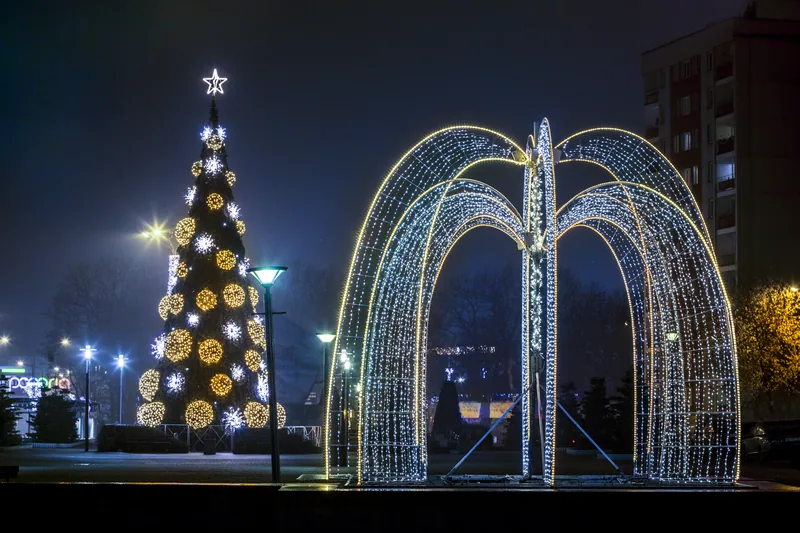
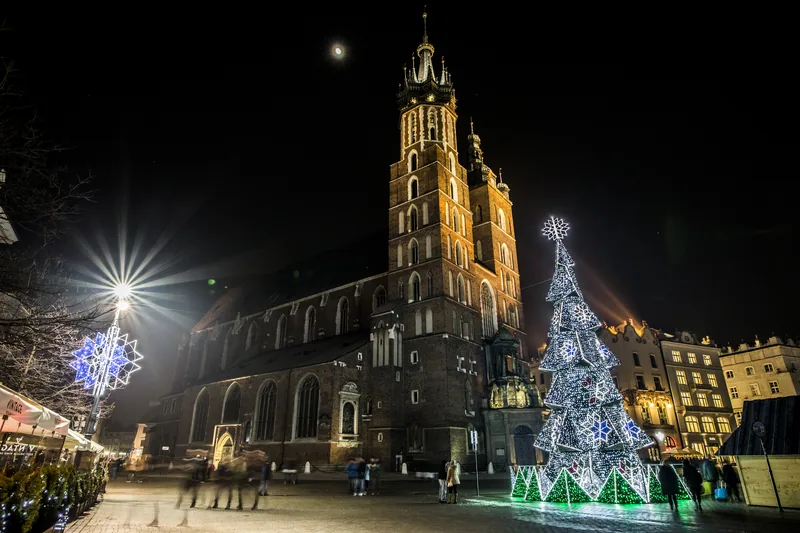
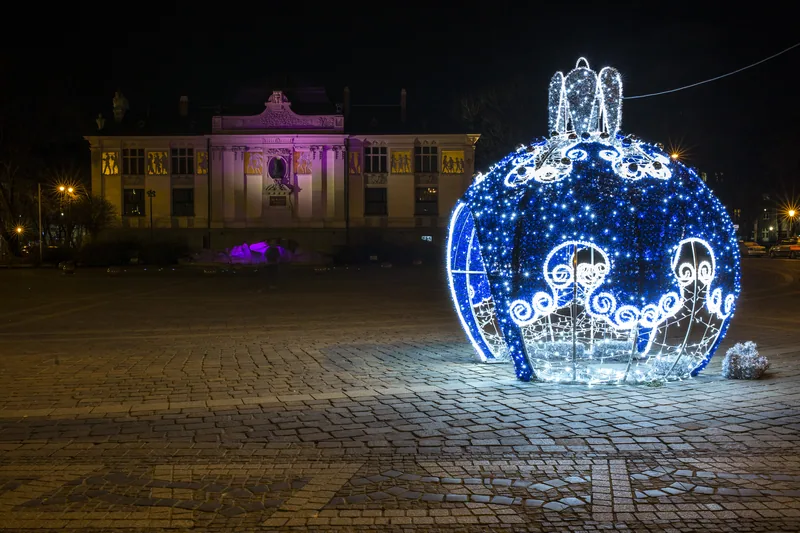
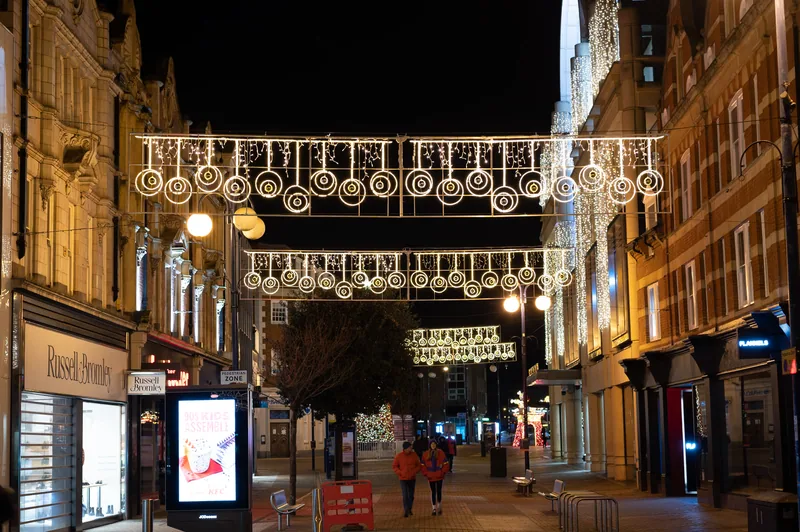
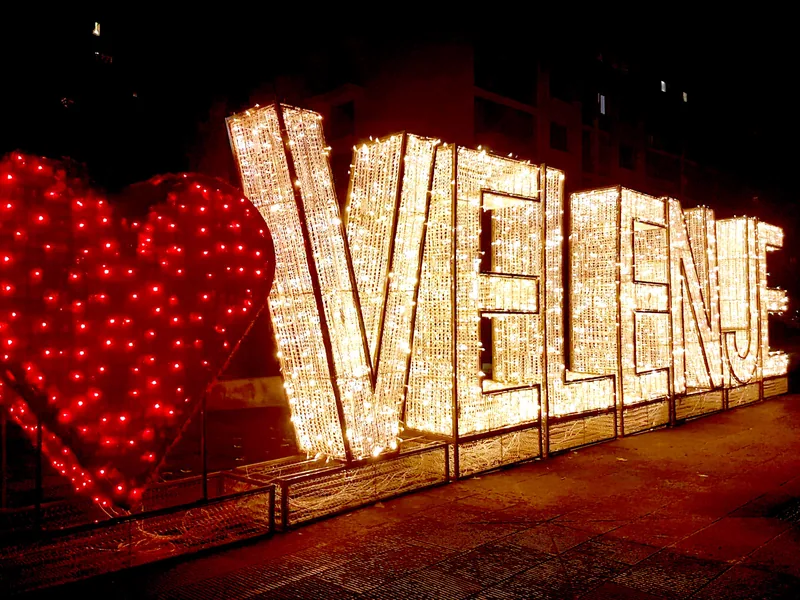
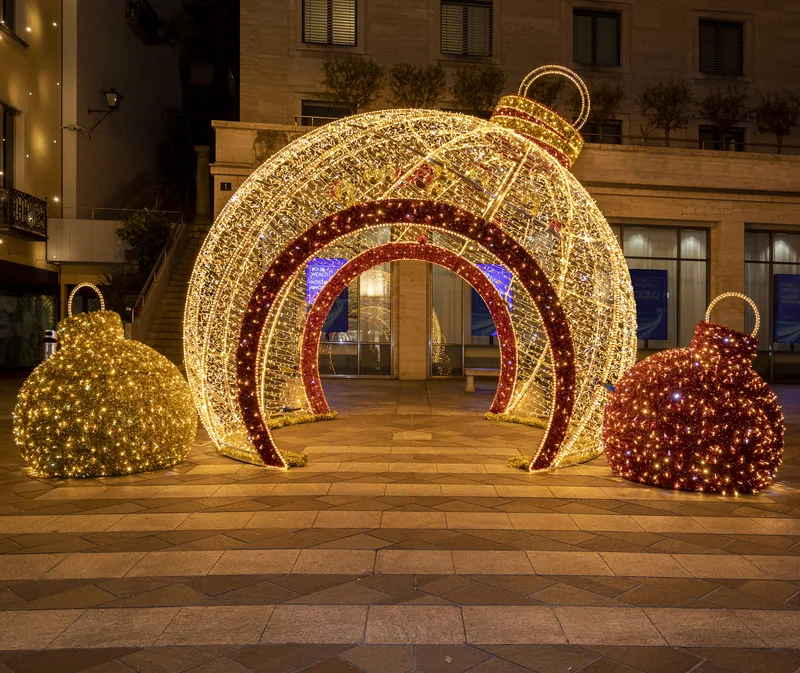
Switch-ons, Blackpool and the British festive calendar
A Christmas light switch-on is a genuine British institution. A high street or town centre turns its illuminations on at a set evening in November, often with a local celebrity and a crowd, and the date is fixed the moment it's announced. For a council or a BID, that means the lighting has to be tested, hung and working well ahead of the night itself, not close to it.
Blackpool as an industry reference
Blackpool Illuminations, running along the seafront each autumn, is the best known large-scale display in the country. It's a reference point the trade uses when discussing scale, motif design and how outdoor illuminations hold up over a long run rather than a single evening.
Bonfire Night opens the season
Early November's Bonfire Night is the point where the retail calendar turns towards Christmas, and switch-on dates then roll out through the rest of the month in different towns. For a supplier and a buyer, that means sample approval and firm orders need to sit well ahead of that calendar, not once the first switch-on programme has already been announced.
Our ranges
Seven product families make up our catalogue, all sourced through verified suppliers rather than manufactured by us.
Fairy lights, indoor and outdoor
Thin-wire fairy lights for windows, displays and indoor hospitality, plus outdoor-rated versions for facades, gardens and terraces on mains or solar power.
Christmas illuminations and icicle lights
Light curtains, icicle lights, 3D motifs and hanging displays for shopfronts, shopping centres and town centres.
Festoon lighting and rope light
Festoon lighting for beer gardens, terraces, marquees and weddings, plus rope light for edging, signage outlines and architectural detail.
Net lights and LED neon flex
LED net lights for hedges and large facades, and cuttable neon flex for signage and illuminated shopfronts, sold by the metre.
Technical specifications that matter for a trade order
A trade buyer needs to check a handful of specifications before confirming volume, beyond how a sample looks in the box.
Run length and connectable chain
Fairy lights and festoon lighting are sold in set lengths measured in metres, with a maximum number of sets that can be connected end to end on a single circuit before the run needs a fresh supply point. Ask a supplier for the connectable chain length in metres and the spacing between fittings, not just the total length printed on the reel.
Colour temperature and IP rating
Colour temperature is measured in Kelvin: warm white sits around 3000K and cool white around 6000K. The IP rating (IP44, IP65...) tells you whether a set can take a British winter outdoors for a full season, which matters more than what's printed on the packaging.
UKCA and CE marking: the compliance question since Brexit
Since Brexit, UKCA marking sits alongside CE marking, and for a trade buyer importing lighting, that overlap is one of the more genuinely confusing parts of the job.
Why both marks can appear on the same product
CE marking applies to goods placed on the EU market. UKCA is the UK's own conformity marking for the Great Britain market, and confirms the same kind of electrical safety testing has been carried out against UK rules specifically. The date by which UKCA becomes compulsory for most goods has been pushed back more than once, so checking a supplier's current position matters more than assuming a previous year's rule still holds. Northern Ireland follows a different arrangement again, generally staying aligned with the EU's CE regime.
What this means for your paperwork
In practice, this means asking a supplier which mark, or marks, they hold, keeping the declaration of conformity on file, and not treating CE alone as automatically sufficient going forward. It's the kind of detail a council tender or a business's own compliance check can and does ask about. Voir aussi : Wholesale LED String Lights and Christmas Lighting for U.S. Commercial.
Why we check this before an introduction
UKCA and CE status is the first thing we ask a supplier for before considering routing a request to them. It doesn't replace an IP rating: a product can carry the correct marking and still be the wrong choice for a display left outdoors all season.
The British electrical standard: voltage, plug type and the fused plug
UK mains supply runs at 230V, 50Hz, delivered through the BS 1363 three-pin plug, known as Type G, which most of the EU and Asia doesn't use.
Why the fused plug matters
Unlike most European sockets, a UK three-pin plug contains its own fuse, rated to the appliance rather than the circuit. It's a genuine British particularity that catches out buyers sourcing straight from a European or Asian catalogue: a product wired for a two-pin European plug needs a proper BS 1363 plug fitted, with the correct fuse, not a travel adaptor, before it can be sold or installed here.
What to check before confirming an order
Ask a supplier whether the product ships with a moulded UK plug and the right fuse already fitted, or whether that work happens after arrival. Also check that the transformer or driver on any low-voltage set is built for a 230V, 50Hz input, rather than stepped down from a different mains standard.
Importing from the EU: customs since Brexit
An order that leaves a factory or warehouse in the EU no longer moves as an intra-community transaction. Since the end of the Brexit transition period, it's an import into Great Britain like a shipment from anywhere else outside the UK, with a customs declaration required at the border.
What changes for a trade buyer
Goods are classified under a commodity code, and import VAT and any applicable duty become due at the point of import rather than being handled through the EU's shared VAT system. Who's responsible for that, you or the supplier, depends on the delivery terms agreed in the order, so it's worth confirming early whether a quoted price is landed or ex-works, and how fulfilment continues by road once goods have cleared.
Northern Ireland is a separate case
Goods moving into Northern Ireland follow different arrangements from Great Britain. If that's your delivery point, say so early so the right paperwork route gets used.
What we ask a supplier
We ask whether a supplier handles export and customs paperwork themselves or expects the buyer to appoint a customs agent, since that changes what lands on your desk after the order is placed. We don't quote duty rates or clearance times here: a supplier or a customs agent can confirm what applies to your specific goods and route.
Volumes, packaging and getting ready to request a quote
Order minimums vary by range and by supplier: festoon and event lighting generally ships in smaller runs than a full pallet of Christmas illuminations. Tell us your approximate volume and we'll route your request to a supplier whose capacity actually fits it.
How product ships
Expect reels, spools or case packs rather than individual retail boxes, with carton counts set by the supplier. Some ask for a VAT number or trade account details before invoicing at wholesale rates, standard practice for a B2B order in the UK.
Three details that speed things up
- Your approximate quantity
- The range you're after: indoor, outdoor, festoon, Christmas illuminations or neon flex
- Your delivery postcode or region
A supplier works out the finer points with you before issuing a firm quote in pounds sterling.
Seasonality: when trade buyers should order
Retail shoppers start buying decorations once the Bonfire Night weekend has passed, and demand keeps building through the switch-on weeks that follow. A trade buyer working to that same calendar is ordering too late.
Why trade buyers move in spring
Councils and BIDs set illumination budgets and go through procurement months ahead of their switch-on date, and a shopping centre or hotel group plans installation for October half term or earlier. Most professional orders are placed in spring, well before the summer.
What happens if you order late
Supplier production capacity fills up fast the closer the calendar gets to autumn. A request sent in spring has far more room to be matched properly than the same request sent once the first switch-on has already taken place.
FAQ
What's the minimum order quantity for a wholesale lighting order?
It depends on the range and the supplier. Festoon and event lighting generally has a lower minimum than a full run of Christmas illuminations. Tell us your approximate volume in the form and we'll route your request to a supplier whose capacity fits it.
Do I need UKCA marking, or is CE marking still enough?
It depends on the product and when you're asking, since the date by which UKCA becomes compulsory has been pushed back more than once. In practice, we check what marking a supplier currently holds, CE, UKCA or both, before considering an introduction.
What's the difference between IP44 and IP65 for outdoor lighting?
These are protection ratings under IEC 60529. IP44 protects against splashing water from any direction and solid objects over 1mm, fine for a sheltered spot. IP65 protects against low-pressure water jets and dust, and is what we'd recommend for a display left out in British weather all season.
Does UK stock need a proper BS 1363 fused plug fitted, or can it arrive with a European plug?
It needs a UK-fused BS 1363 plug, moulded or properly fitted, before it can be sold or installed here. A European two-pin plug on a travel adaptor isn't a substitute. Ask your supplier whether the correct plug and fuse rating are fitted before the goods ship.
Can we get a sample before committing to a full order?
Most suppliers in our network can send a sample before you commit to a production run. Ask for one once we've made the introduction, and check the length, colour temperature and marking yourself before confirming volume.
Can you supply custom branding or packaging (white label)?
Some suppliers offer custom packaging or labelling, others don't. Mention it in your message and we'll only route you to a supplier that can do it at your volume.
Do you cover suppliers who ship across the UK and into Europe?
Coverage depends on the supplier. Some deliver UK-wide only, others also cover all or part of Europe. Tell us your delivery country or region in the form so we can account for it.
What's the difference between warm white and cool white?
Warm white, around 3000K, gives an amber, incandescent-like glow, common on facades and Christmas illuminations. Cool white, around 6000K, is whiter and brighter, and is often used for signage or event lighting. Specify which you need in your request.
Request a personalised quote
Company, range and estimated quantity are the three details that matter most. Everything else helps us route your request faster.
How it works
No cost to submit a request. A person reads every message, and if a supplier fits your needs, we make the introduction directly by email.
Lead time: 4 weeks minimum on trade orders, counted from order confirmation.
Request form
Kerstverlichting en LED verlichting groothandel voor bedrijven